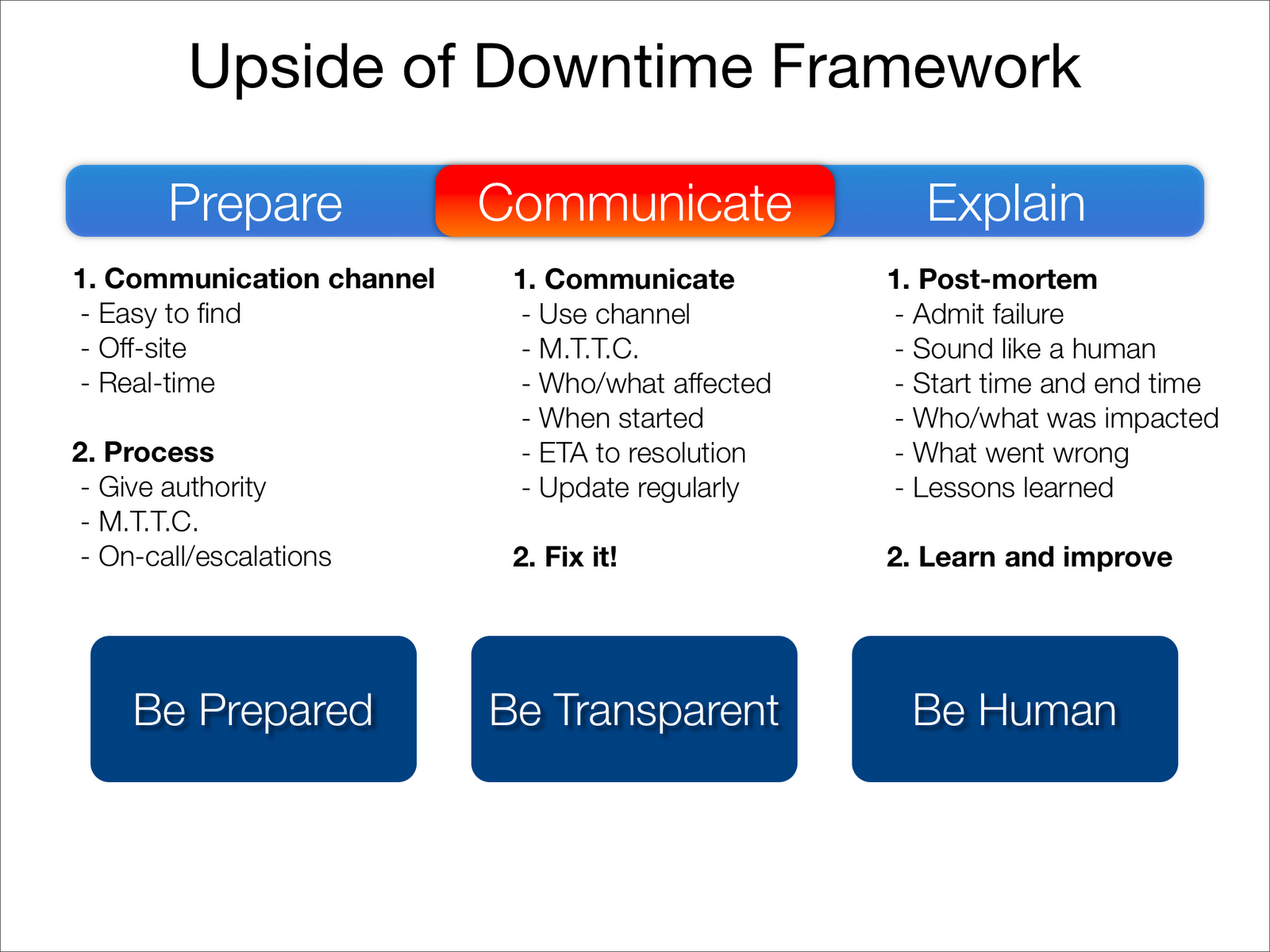
Wednesday, February 18, 2009

Transparency as a Stimulus

A bit off topic, but I just wanted to share a great article over at Wired about the transparency side benefits that may come along as a result of the stimulus package:
With President Obama's signing of the “American Recovery and Reinvestment Act,” better known as our national Hail Mary stimulus bill, billions will be ladled for infrastructure projects ranging from roads to mass transit to rural broadband.

But the law also contains a measure promoting a less-noted type of economic infrastructure: government data. In the name of transparency, all the Fed’s stimulus-spending data will be posted at a new government site, Recovery.gov.

That step may be more than a minor victory for the democracy. It could be a stimulus in and of itself.

The reason, open government advocates argue, is that accessible government information—particularly databases released in machine-readable formats, like RSS, XML, and KML—spawn new business and grease the wheels of the economy. "The data is the infrastructure," in the words of Sean Gorman, the CEO of FortiusOne, a company that builds layered maps around open-source geographic information. For every spreadsheet squirreled away on a federal agency server, there are entrepreneurs like Gorman ready to turn a profit by reorganizing, parsing, and displaying it.

...

The more obvious economic benefits, however, will come from innovations that pop up around freely available data itself. Robinson and three Princeton colleagues argue in a recent Yale Journal of Law and Technology article that the federal government should focus on making as much data available as RSS feeds and XML data dumps, in lieu of spending resources to display the data themselves. “Private actors,” they write, “are better suited to deliver government information to citizens and can constantly create and reshape the tools individuals use to find and leverage public data.”

Check out http://www.recovery.gov/ and http://www.stimuluswatch.org/ to follow this story.

Monday, February 16, 2009

Media Temple goes down, provides a nice case study for downtime transparency

Earlier today we saw Media Temple experience intermittent downtime over the course of an hour. The first tweet showed up around 8am PST noting the downtime. At 9:06am Media Temple provided a short message confirming the outage:

At ~8:30AM Pacific Time we started experiencing networking issues at our El Segundo Data Center. We are working closely with them to determine the cause of these issues and will report any findings as they become available.

At this time we appear to be back fully. The tardiness of this update is a direct result of these networking issues.

So far, not too bad. Though note the broken rule in hosting your status page in the same location as your service. Lesson #1: Host your status page offsite. Let's keep moving with the timeline....

About the same time the blog post went up, a Twitter message by @mt_monitor pointed to the official status update. Great to see that they actually use Twitter to communicate with their users, and judging by the 360 followers, I think this was a smart way to spread the news. On the other hand, this was the only Twitter update from Media Temple throughout the entire incident, which is strange. And it looks like some users were still in the dark for a bit too long. I was also surprised that the @mediatemple feed made no mention of this. Maybe they have a good reason to keep these separate? Looking at the conversation on Twitter, feels like most people by default use the @mediatemple label. Lesson #2: Don't confuse your users by splitting your Twitter identity.

From this point till about 9:40am PST, users were stuck wondering what was going on:


A few select tweets show us what users were thinking. The conversation on Twitter goes on for about 30 pages, or over 450 tweets from users wondering what the heck was going on.

Finally at 9:40am, Media Temple released their findings:

Our engineers have spoken with the engineers at our El Segundo Data Center (EL-IDC3). Here are their findings:

ASN number 47868 was broadcasting invalid BGP data that caused our routers, and a lot of other routers on the internet, to reboot. This invalid BGP data exploited a software bug in our routers. We have applied filters to prevent us from receiving this invalid data.

At this time they are in contact with their vendors to see if there is a firmware update that will address this. You can expect to see network delays and small outages across the internet as other providers try to address this same issue.

Now that everything is back up and users are "happy", what else can we learn from this experience?

Lessons
  1. Host your status page offsite. (covered above)
  2. Don't confuse your users by splitting your Twitter identity. (covered above)
  3. Some transparency is better then no transparency. The basic status message helped calm people down and reduce support calls.
  4. There was a huge opportunity here for Media Temple to use the tools of social media (e.g. Twitter/Blogging) as a two-way communication channel. Instead, Media Temple used both their blog and Twitter as a broadcast mechanism. I guarantee that if there were just a few more updates throughout the downtime period the tone of the conversation on Twitter would have been much more positive. Moreover, the trust in the service would have been damaged less severely if users were not in the dark for so long.
  5. A health status dashboard would have been very effective in providing information to the public beyond the basic "we are looking into it" status update. Without any work on the part of Media Temple during the event, its users would have been able to better understand the scope of the event, and know instantly whether or not it was still a problem. It would have been extremely powerful when combined with lesson 4, if a representative on Twitter simply pointed users complaining of the downtime to the status page.
  6. The power of Twitter as a mechanism for determining whether a service is down (or whether it is just you), and in spreading news across the world in a matter of minutes, again proves itself.

What every online service can learn from Ma.gnolia's experience

A lot has been said about the problem of trust in the Cloud. Most recently, Ma.gnolia, a social bookmarking service, lost all of its customers data and is in the process of rebuilding (both the service and the data). The naive take-away from this event is to use this as further evidence that the Cloud cannot be trusted. That we're setting ourselves up for disaster down the road with every SaaS service out there. I see this differently. I see this as a key opportunity for the industry to learn from this experience, and to mature. Both through technology (the obvious stuff) and through transparency (the not-so-obvious stuff). Ma.gnolia must be doing something right if the community has been working diligently and collaboratively in restoring the lost data, while waiting for the service to come back online and to use it again.

What can we learn from Ma.gnolia's experience?

Watching the founder Larry Halff explain the situation provides us with some clear technologically oriented lessons:
  1. Test your backups
  2. Have a good version based backup system in place
  3. Outsource your IT infrastructure as much as possible (e.g. AWS, AppEngine, etc.)
This is where most of the attention has been focused, and I have no doubt Larry is suck of hearing what he should have done to have avoided this from ever happening. Let's assume this will happen again and again with online services, just as is it has happened with behind-the-firewall services or local services in times past. Chris Messina (@factoryjoe) and Larry hit the nail on the head in pointing to transparency and trust as the only long term solution to keep your service alive in spite of unexpected downtime issues (skip to the 18:25 mark):


For those that aren't interested in watching 12 minutes of video, here are the main points:
  • Disclose what your infrastructure is and let users decide if they trust it
  • Provide insight into your backup system
  • Create a personal relationship with your users where possible
  • Don't wait for your service to have to go through this experience, learn from events like this
  • Not mentioned, but clearly communicate with your community openly and honestly.
There's no question that this kind of event is a disaster and could very easily mean the end of Ma.gnolia. I'm not arguing that simply blogging about your weekly crashes and yearly data loss is going to save your business. The point is that everything fails, and black swan events will happen. What matters most is not aiming for 100% uptime but aiming for 100% trust between your service and your customers.

Thursday, February 12, 2009

An overview of big downtime events over the past year

A relatively good review of the major downtime events in the recent past, with a solid conclusion at the end:
The bigger Web commerce gets, the bigger the opportunities to mess it up become. Outages and downtimes are inevitable; the trick is minimizing the pain they cause.
As we've seen over the past few months, the simplest way to minimize that pain is by letting your customers know what's going on. Before, during, and after. A little transparency goes a long way.

The transparent business plan by Mark Cuban

Big idea from Mark Cuban:

You must post your business plan here on my blog where I expect other people can and will comment on it. I also expect that other people will steal the idea and use it elsewhere. That is the idea. Call this an open source funding environment.

If its a good idea and worth funding, we want it replicated elsewhere. The idea is not just to help you, but to figure out how to help the economy through hard work and ingenuity. If you come up with the idea and get funding, you have a head start. If you execute better than others, you could possibly make money at it. As you will see from the rules below, these are going to be businesses that are mostly driven by sweat equity.

Read more here. What will you come up with?

Update: Seth Godin's crew gives away 999 potential business ideas. Ideas are a dime a dozen as they say. It's all about the execution.

Wednesday, February 11, 2009

Transparency User Story #1: Your service seems to be down. I'd like to know if it's down for anyone else or if it's just me.

Note: This post is the first in a series of at least a dozen posts where I attempt to drill into the transparency user stories described in an earlier post.

Let's assume that you've decided that you want to make your service or organization more transparent, specifically when it comes to it's uptime and performance. You've convinced your management team, you've got the engineering and marketing resources, and your rearing to go. You want to get something done and can't wait to make things happen. Stop right there. Do not pass go, do not collect $200. You first need to figure out what it is you're solving for. What problems (and opportunities) do you want to tackle in your drive for transparency?

Glad you asked. There are about a dozen user stories that I've listed in a previous post that describe the most common problems transparency can solve. In this post, I will dive into the first user story:
As an end user or customer, it looks to me like your service is down. I'd like to know if it's down for everyone or if it's just me.
Very straight forward, and very common. So common there are even a couple simple free web services out there that helps people figure this out. Let's assume for this exercise that your site is up the entire time.

Examples of the problem in action
  1. Your customer's Internet connection is down. He loads up www.yoursite.com. It cannot load. He thinks you are down, and calls your support department demanding service.
  2. Your customer's DNS servers are acting up, and are unable to resolve www.yoursite.com inside his network. He finds that google.com is loading fine, and is sure your site is down. He sends you an irate email.
  3. Your customer network routes are unstable, causing inconsistent connectivity to your site. He loads www.yourcompetitor.com fine, while www.yoursite.com fails. He Twitters all about it.
Why this hurts your business
  1. Unnecessary support calls
  2. Unnecessary support emails.
  3. Negative word of mouth that is completely unfounded.
How to solve this problem
  1. An offsite public health dashboard
  2. A known third party, such as this and this or eventually this
  3. A constant presence across social media (Twitter especially) watching for false reports
  4. Keeping a running blog noting any downtime events, which tells your users that unless something is posted, nothing is wrong. You must be diligent about posting when there is actually something wrong however.
  5. Share your real time performance with your large customers. Your customers may even want to be alerted when you go down.
Example solutions in the real world
  1. Many public health dashboards
  2. The QuickBooks team notifying users that their service was back up
  3. Sharing your monitoring data in real time with your serious customers
  4. Searching Twitter for outage discussion

Tuesday, February 10, 2009

Differentiate yourself through honesty

A great post over at "A Smart Bear" focusing on being honest with your users. Some of my favorite recommmendations:
  • Admit when you're wrong, quickly and genuinely.
  • As soon as something isn't going to live up to your customer's expectation -- or even your own internal expectations -- tell them. Explain why there's a problem and what you're doing about it.
  • Instead of pretending your new software has no bugs and every feature you could possibly want, actively engage customers in new feature discussions and turn around bug fixes in under 24 hours.
  • Send emails from real people, not from info@company.com.
Honesty is a prerequisite to transparency. Opening up to your customers forces you to be honest. Why not use it as a competitive advantage?

Seth Godin provides his own perspective on the the best approach:

Can you succeed financially by acting in an ethical way?

I think the Net has opened both ends of the curve. On one hand, black hat tactics, scams, deceit and misdirection are far easier than ever to imagine and to scale. There are certainly people quietly banking millions of dollars as they lie and cheat their way to traffic and clicks.

On the other hand, there's far bigger growth associated with transparency. When your Facebook profile shows years of real connections and outreach and help for your friends, it's a lot more likely you'll get that great job.

When your customer service policies delight rather than enrage, word of mouth more than pays your costs. When past investors blog about how successful and ethical you were, it's a lot easier to attract new investors.